
Refinery Hydrotreater Heat Exchanger Retube — 321 & 2205 U-Tubes
Project Background
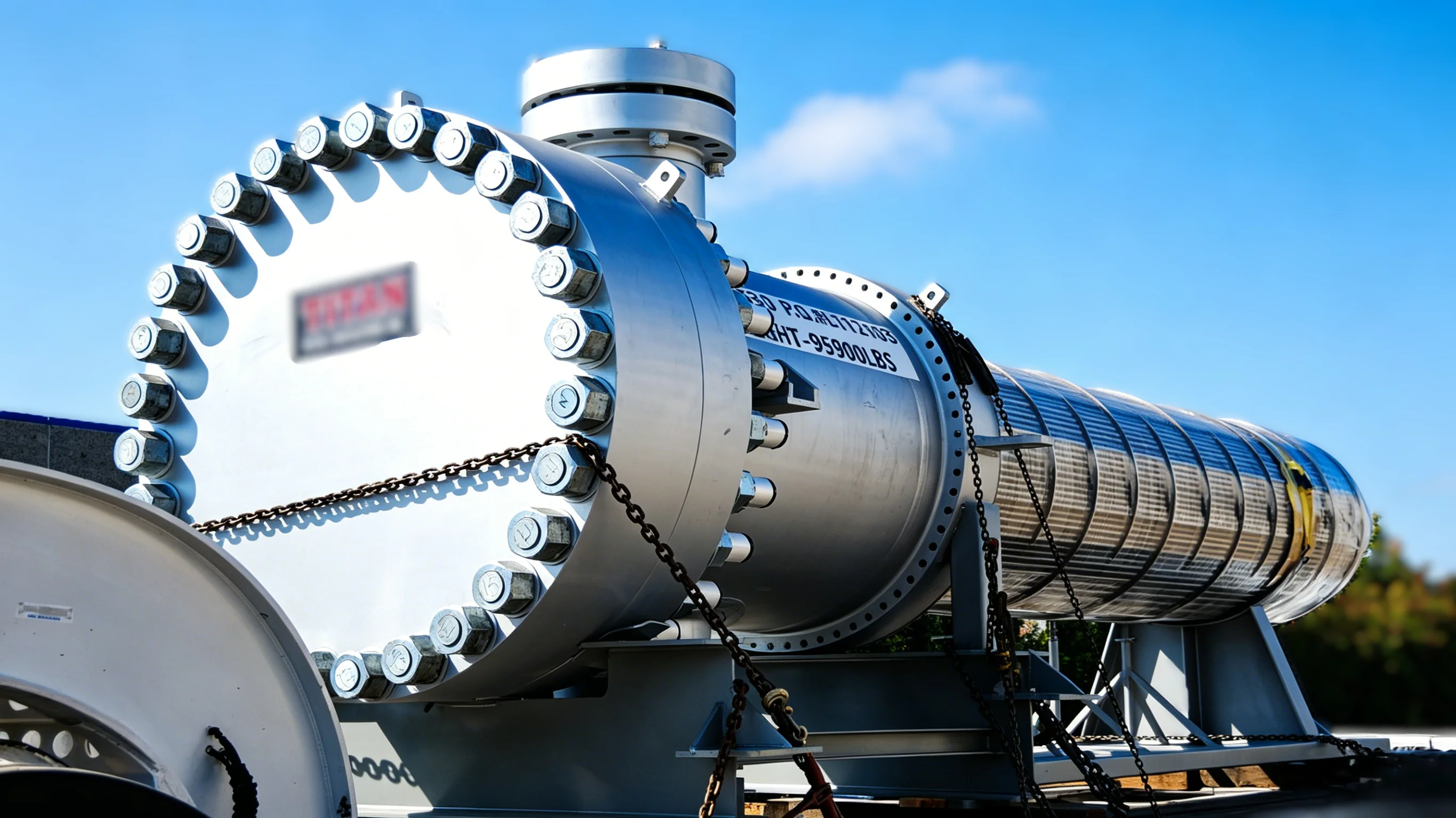
A major refinery in Saudi Arabia operates a naphtha hydrotreating unit where the feed/effluent heat exchanger originally used carbon steel tube bundles. After 5 years of service at 350°C in H₂S-rich environment, severe sulfidic corrosion caused tube wall thinning exceeding 0.3 mm/year. During a planned 45-day shutdown window, the owner needed complete retubing of 4 heat exchangers with upgraded materials to extend run length between turnarounds.
Technical Specifications
| Grade | ASTM A213 TP321 Seamless U-Tubes; UNS S32205 Seamless Pipes |
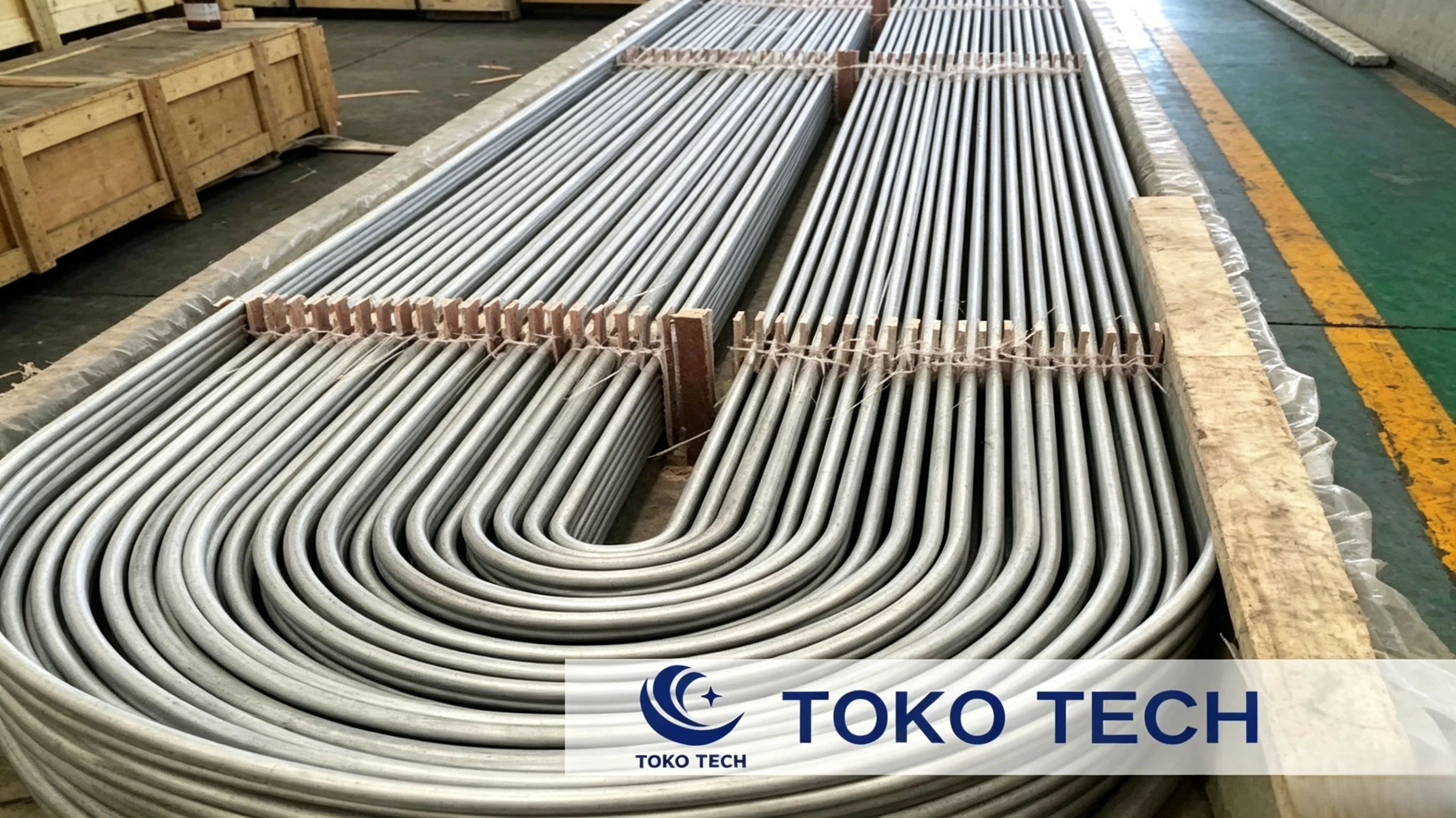
| Size Range | OD 19.05 – 38.1 mm (3/4" – 1-1/2"), multiple U-bend radii |
| Standards | ASTM A213, TEMA Class R, API 660, NACE MR0103 |
| NDE Requirements | Post-bend solution anneal + 100% Eddy Current + per-tube hydro (1.5× design P) |
The Challenge
U-tube bending introduces cold work residual stresses and sensitization risk in stainless steels. If not properly post-bend heat treated, this leads to stress corrosion cracking in H₂S service and reduced intergranular corrosion resistance — both unacceptable for refinery heat exchanger reliability.
TOKO TECH Solution
TOKO TECH performed secondary solution annealing (940°C ± 10°C / rapid cooling) on all 321 U-tubes after bending to eliminate cold work residual stresses and restore intergranular corrosion resistance. For the high-temperature H₂S section, 2205 duplex tubes were supplied, leveraging the duplex microstructure's superior resistance to stress corrosion cracking and significantly increasing operational safety margins.
Related Products
Materials Used
Industry Applications
Search Keywords
Frequently Asked Questions
Why do U-tubes need post-bend heat treatment?
What is the difference between NACE MR0175 and NACE MR0103?
How fast can a heat exchanger retube be completed?
Need a Similar Solution?
Tell us about your project requirements and we'll develop the optimal material specification and delivery schedule for your application.
Request a Quote